

Clause and effect: the importance of well-drafted model clauses

Contracts, like disputes, come in all shapes and sizes. Most parties to a contract are keen to get the deal finalised and signed on the dotted line as quickly as possible. There isn’t always an appetite to pore over model clauses in a contract, with the parties generally agreeing that as long as there is some form of dispute resolution clause in place, all will be well. Unfortunately, if your dispute resolution model clauses are not well-drafted, this approach may come back to bite. This article will explore what a model clause is, how it operates and why it is vital to parties not only in times of strife but also in ensuring that commercial relationships can be maintained during less tumultuous times.
Author(s): Hannah Aziz
Four people in business attire are gathered around a table in a bright office. Two individuals are seated, reviewing documents with model clauses, while the other two stand, observing and discussing. A small plant and glass bottle are on the table under a skylight.

What is a model clause and how does it operate?

In the dispute resolution context, a model clause will outline the parties’ options in the event of a dispute and the processes that the parties agree to engage in to solve that dispute. Multi-tiered or waterfall clauses require the parties to work through a series of different dispute resolution processes. For example, starting with direct negotiation, then (failing success in negotiation) mediation, then (failing success in mediation), arbitration. We would caution against using such a clause for several reasons.  

First, there can often be arguments about whether the parties have adequately attempted negotiation and mediation before initiating arbitration. This causes delay and the inevitable costs implications of such a delay. Second, a forced or poorly timed negotiation or mediation may not serve the parties early on if unsuccessful. In fact, it may serve to dissuade parties from attempting the same at a later date, when the issues have been defined, and there has been a sufficient exchange of information and positions such that the time is right and ripe to engage in those processes. 
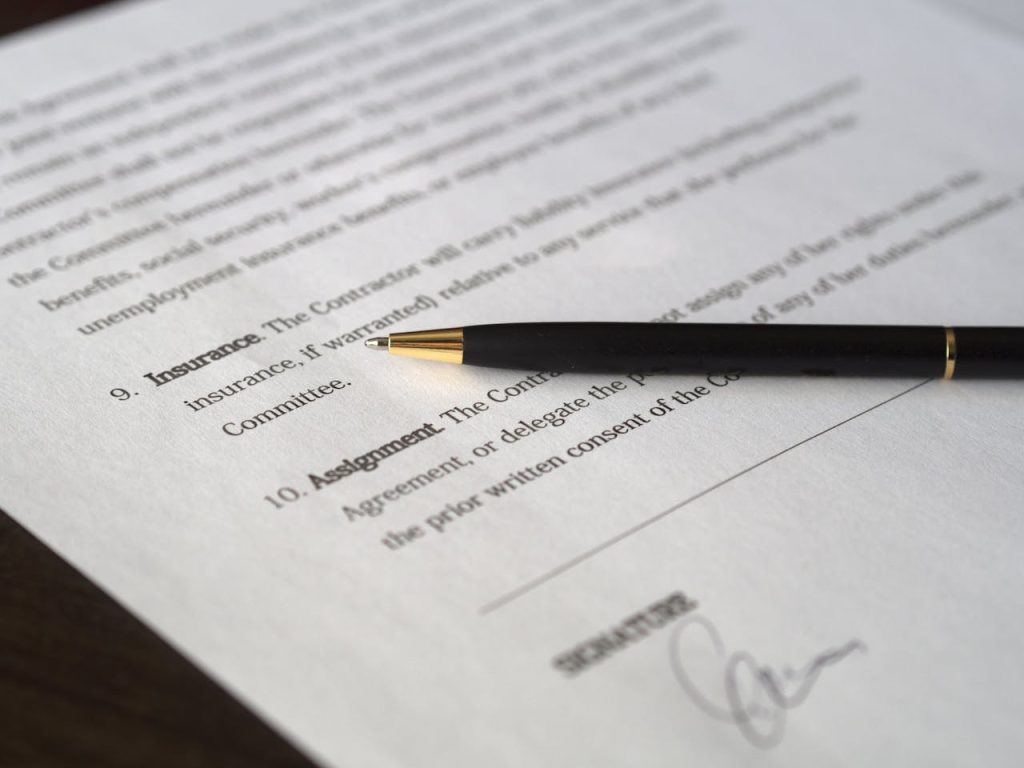
A close-up of a partially visible document with numbered sections. A black pen with a gold tip rests horizontally across the page. The document appears to be a formal agreement or contract, featuring model clauses, with a signature partially visible at the bottom.

What makes a good model clause?

A good model clause can be effectively and efficiently relied on to resolve a dispute promptly by whatever process is agreed. Model clauses need to be clear and certain in terms of both the process and the means of securing the appointment of the relevant third party neutral (for example, arbitrator, mediator, or expert).  

Simply referring disputes arising to mediation or arbitration is ineffective and inefficient. Parties routinely spend significant time (and money) arguing over what the process should look like, who to appoint to be the mediator or arbitrator and procedural and timetabling matters. This can all be easily avoided by careful drafting of dispute resolution clauses. 

Two people are engaged in a conversation over a desk. One person, wearing a suit, is holding out a pen and a piece of paper with model clauses, while the other person has their hands clasped together on the desk, appearing to be in a decision-making moment.

Why are model clauses important?

A well-drafted model clause is vital in giving the parties certainty in times of dispute. Disagreements cause commercial upset and can threaten what was once a strong working relationship. In order to deal with a dispute quickly and cost-effectively, a well-drafted model clause will provide the parties with a level of certainty around how a dispute will be resolved (the process/es to be adopted) and will clearly outline the parties’ respective duties to fulfil that process. Knowing that a well-drafted model clause is in place, the parties can be confident that should a problem arise, there will be an effective mechanism to resolve that dispute. Having clear and well-drafted model clauses can also help to ensure that (where appropriate) there is an opportunity for commercial relationships to be preserved despite instances where conflicts arise. Good model clauses can assist the parties in getting back on track quickly and cost-effectively. 

Our approach to model clauses

Rather than encouraging multi-tiered or waterfall clauses, our rules for arbitration and mediation allow the parties to move from one process to the next in an efficient manner. They do this by: 

  • requiring any arbitration to be stayed in the event the parties wish to mediate; and 
  • allowing a party to initiate arbitration in the event a mediation does not result in a full and final settlement of the dispute. 

Our approach is a commercial, practical, and cost-considerate one. We understand that during the course of a dispute resolution process, it may be that a preferred process comes to light depending upon the parties’ appetite to resolve a dispute or in light of any information that emerges during the process. Using our model clauses helps to ensure that the parties can have confidence that they are being guided by procedures that acknowledge the commercial realities of a dispute. 

Two individuals are shaking hands over a desk. The desk has a laptop, a cup of coffee, a pen, a pair of glasses, and documents. One person is wearing a white shirt, and the other is in a black sleeve, possibly indicating a formal agreement or business deal.

Conclusion

As outlined above, well-drafted model clauses add value to your business overall and give parties the confidence that commercial relationships can be preserved even during times of conflict. Our carefully drafted model clauses can be used to add that value. For more guidance on our model clauses and on any other dispute resolution process we offer, please visit our websites at NZDRC for domestic matters and NZIAC for international matters. 

Other resources you might like

If you found this article helpful and are interested in learning more, there is a wealth of other resources available on our website. We have a wide array of articles and guides on a variety of topics, each designed to provide you with a deeper understanding of the subject matter. We encourage you to explore these resources and deepen your knowledge.

Three people in business attire gathered around a table. Two are shaking hands while standing, and the third person, holding a laptop, stands nearby. A smartphone, coffee cup, and a rectangular planter are visible on the white conference table.

Singapore High Court compels party to arbitration to engage in mediation

In the first case of its kind in Singapore, the High Court (Court) has ordered specific performance compelling a party already involved in arbitral proceedings to attend mediation. With no previous caselaw in Singapore ordering performance of mediation as a contractual obligation, Maxx Engineering Works Pte Ltd v PQ Builders Pte Ltd [2023] SGHC 71 will be useful precedent for future disputes involving tiered dispute resolution clauses.
Open office with wooden desks, computer monitors, and various office supplies. A person works at a desk in the background. The space is decorated with plants and has large windows allowing natural light to fill the room.

When can an arbitrator voluntarily resign and what are the implications for the arbitration?

Circumstances can arise when an arbitrator in a domestic arbitration needs to voluntarily resign their appointment. But what is the status of the arbitration if this occurs? Does the court have jurisdiction to step in? This article looks at a recent Canadian decision which addresses these questions and provides guidance on the factors an arbitrator should consider before voluntarily resigning.
A grand building with intricate architecture and multiple spires, set against a blue sky with scattered clouds. Several flags, including red and yellow ones, can be seen in front of the building. The structure appears historic and majestic.

The State immunity siesta: Australia’s top court renews Spain’s understanding of ICSID

In a recent decision, the High Court of Australia has ruled that an ICSID arbitration award between the Kingdom of Spain and a company from Luxembourg, Infrastructure Services Luxembourg S.à.r.l, can be recognised and enforced, but not the subject of execution. Kingdom of Spain v Infrastructure Services Luxembourg S.à.r.l. & Anor provides clarity around the application of State immunity and develops an understanding on how the ICSID Convention can be interpreted. [1]

Get in touch

Contact our team today to see how we can help

Contact us

This field is for validation purposes and should be left unchanged.